How to Make Peace with Your Plate: 5 Steps to Food Freedom
Health and Wellness


Audio By Carbonatix
By Jess Brown, Crosswalk.com
Eating. It is something we all have to do every day. For some, it is a source of excitement and anticipation. For others, it is a source of stress and angst. For many, it is a roller coaster of emotion that takes us on quite a journey.
What’s more, our oversaturated world leaves us confused about what the right things to eat are. I saw an ad the other day that said, “Eat like the disciples, stop eating for pleasure.” Didn’t the disciples feast with Jesus for days? What’s ironic is that this ad was right above another that prompted me to eat for my blood type. I don’t even know my blood type…
With all this confusion and emotion around food, it’s easy to see why “food freedom” can feel out of reach. But as believers, we don’t have to stay stuck. I trust what God’s word says in Galatians 5:1: "For freedom Christ has set us free, stand firm therefore, and do not submit again to a yoke of slavery." And in 2 Corinthians 3:17, "now the Lord is the Spirit, and where the Spirit of the Lord is, there is freedom." This means freedom is possible for us in every area—including with our food. To help you along your way, here are five steps to walk you toward food freedom:
Photo Credit: ©Getty Images/Jorg Greuel

Step One: Regulate Your Nervous System
Regulating your nervous system is a popular idea right now, but what does it really mean? And what does the Bible say about it?
Our bodies have two main nervous systems: the sympathetic and the parasympathetic. Both are important for how we function each day. Our fight-or-flight hormones drive our sympathetic nervous system. This part of us is powered by stress, both good and bad, and helps us get things done. It pushes us to take on challenges, grow, and try new things. I picture this as putting on a pair of high heels.
The other side is our parasympathetic nervous system, also called our rest-and-digest system. I think of this as taking off the high heels and putting on slippers. This part helps us slow down, process, repair, and recover.
Both systems are important for getting through the day. Sometimes we need to put on those heels and get moving. But if we wear them all the time, we end up with blisters and sore feet! We need to be able to take them off and put on comfortable slippers, too.
A big part of regulating our nervous system is learning the rhythms of rest and retreat. The Bible shows us this clearly. In Genesis, God creates the heavens and the earth, and then on the seventh day, He rests. We also see it when Jesus calms the storm. He is sleeping (Matthew 8:26) while the disciples panic as the storm rages around them. He is literally resting because he carries a supernatural peace.
This shows us something important: regulating your nervous system means knowing who is in control. We do not have to stay stuck in stress because we can trust that God cares for us. This helps us know when to take action and when to rest and let God handle things.
Photo Credit: ©GettyImages/damircudic

Step 2: Consider the Mission of Your Nutrition
Be curious. Once we learn to regulate our nervous system, we can start to ask questions. We move out of fight-or-flight mode and into a place where we can reflect, and that is when we can start to feel curious about food again.
One of my favorite passages in the New Testament is when Paul is speaking to the Corinthians. In First Corinthians 10:31, he writes, "So whether you eat or drink, or whatever you do, do it all for the glory of God." Here, Paul is speaking to the Corinthian church as he helps them reconcile the old law with the new adoption of the Gentiles into the family of God. When he addresses old traditions around food, he lands on this simple truth: whatever you eat or drink, do it for the glory of God. This is our mission.
Now, imagine nutrition as a way to support that daily mission. Your mission can change from day to day depending on what God has called you to do. Some days, you need energy for a busy schedule, so you might focus on eating more protein, fiber, and whole foods. Other days, your mission could be celebrating your child’s birthday, where the most important thing is connecting with them and celebrating who God made them to be. On another day, you might sit with a friend who is struggling with food and eat what she is eating to support her. That is a mission too.
In 1 Corinthians, Paul invites us to see food through a spiritual lens. It is more than just nutrients; it is a way to glorify God. What mission does God have for you today, and how can your nutrition support that?
Photo Credit: ©GettyImages/Witthaya Prasongsin

Step 3: Release and Repent
A big part of finding food freedom is honestly looking at how sin has shaped our relationship with food and our bodies. Sometimes, this comes from outside us. We live in a culture that puts beauty, fitness, and appearance on a pedestal, and even health can become an idol. This way of thinking can become so normal that it takes over our minds.
Other times, the struggle is inside us. We might use food for comfort, turning to it for reasons other than its real purpose. Enjoying fun foods is not the same as eating for comfort. Food can be joyful, celebratory, and delicious, as we see in Jewish traditions at their many feasts. The key is whether we use food to avoid feelings or if we enjoy it as part of a full life. When we stop eating just for comfort, we can enjoy fun foods more naturally, without guilt or needing them to fix something in us. This step toward food freedom may take more than just reading about it. Since food is often so emotional, working with a nutrition therapist can be helpful and sometimes necessary.
When we honestly face these issues and bring them to God, we can let go of any idols we have made—whether about food, beauty, fitness, or anything else. This helps us let go of burdens we were never meant to carry. It gives us freedom to see nutrition as something that supports our mission and helps us release control.
Photo Credit: ©GettyImages/millann
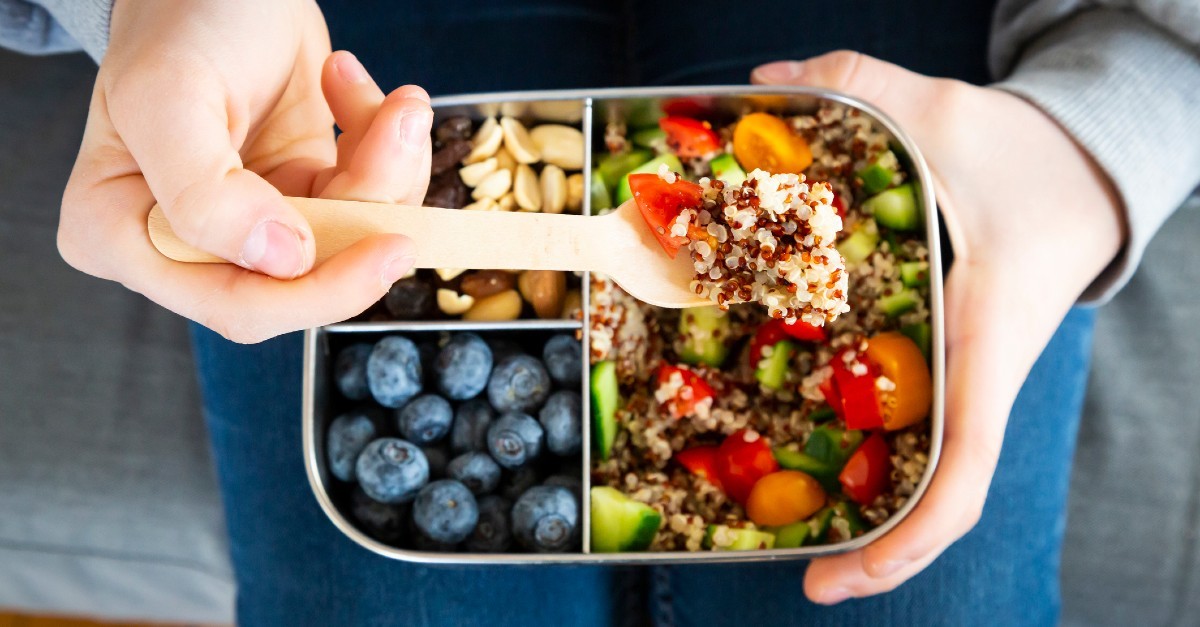
Step 4: Calibrate
Making peace with food can feel overwhelming because we do not always have the right information. There is so much nutrition advice online, but not all of it fits your personal needs.
One of the best things we can do to find food freedom is to seek wise counsel. The Bible speaks to this in many places; my two favorites are Proverbs 15:22: "plans fail for lack of counsel, but with many advisers they succeed." Proverbs 11:14, "where there is no guidance, a people falls, but in an abundance of counselors there is safety." Seeking wise counsel goes a long way.
Meeting one-on-one with a healthcare provider or dietitian can help you learn what your body needs. I compare it to meeting with my accountant each year. She knows things I do not because it is her specialty. I bring my own experience, and she brings her training. It works the same way with a healthcare provider.
If this step makes you nervous, remember there is a reason steps one through three come first. Once you have regulated your nervous system, thought about your nutrition mission, and released anything holding you back, these health care appointments can feel neutral, helpful, and empowering.
Photo Credit: ©Getty/Westend61
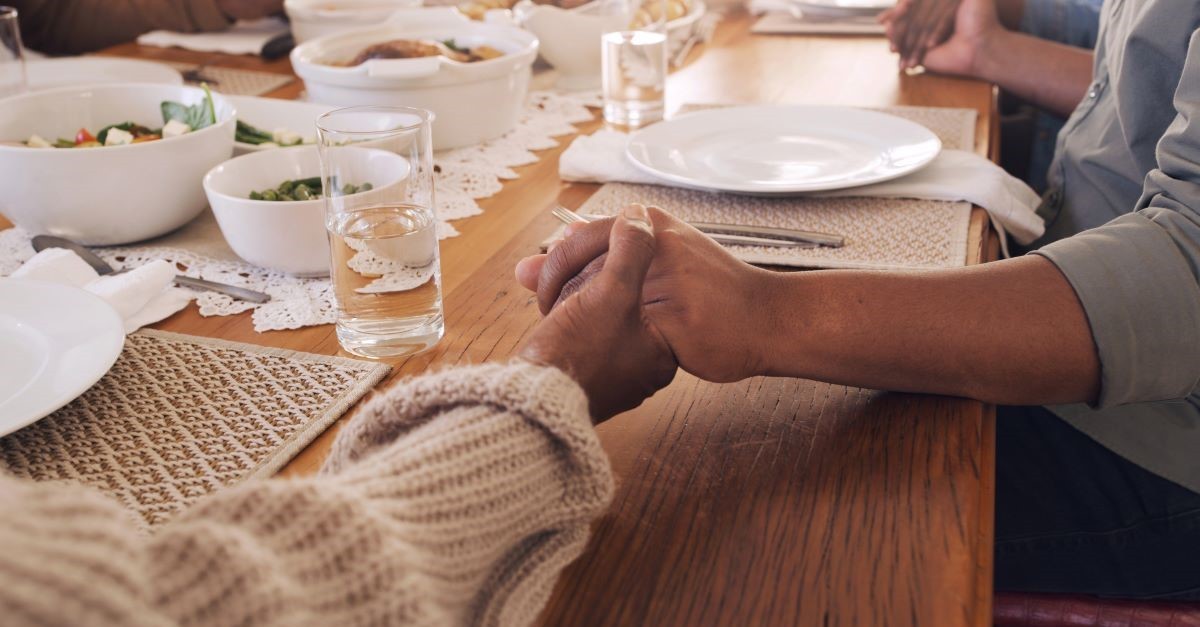
Step 5: Pray
After almost twenty years in this field, I have noticed that many believers forget to include prayer in this process. For some reason, we often overlook prayer as a powerful tool in our journey to food freedom.
When we are facing any battle, as so many do in the pursuit of food freedom, it is helpful to consider putting on the armor of God. In Ephesians 6, we are reminded of the belt of truth, which steadies us as we learn to see food clearly, and our feet fitted with the readiness that comes from peace, trusting our Creator instead of fighting our own body. And after all the armor is described, Paul doesn't stop there.
After the armor of God is described, it says in Ephesians 6:18, "and pray in the Spirit on all occasions, with all kinds of prayers and requests. With this in mind, be alert always, keep on praying for the Lord's people." I think of it in the sense that we can do all the things right, but if we do not pray, we don't finish the work.
The wonderful thing is that prayer holds everything together. It helps us turn what we read into real action. Prayer invites the Holy Spirit to work in our lives so we can grow and learn, and it keeps grace at the center. Shame does not belong between you and food. Through Christ, we are set free, including in how we eat.
Photo Credit: ©GettyImages/shapecharge


