What the Race Toward Superintelligence Reveals About Human Limits
Guest Commentary


Audio By Carbonatix
By Shawn Paul Wood, Crosswalk.com

Key Points
- The federal government now uses “Super Intelligence” as its official term for artificial intelligence, rather than limiting the phrase to hypothetical machines that surpass human intelligence.
- Technological advancement can produce tremendous good, but greater capability does not automatically produce greater wisdom.
- Christian ambition is not inherently wrong, but the desire for constant “more” can become discontentment, covetousness, or pride.
- The Tower of Babel warns against human achievement becoming a means of self-exaltation and independence from God.
- Christians can embrace innovation while remembering that true wisdom begins with reverence for God rather than confidence in human intelligence alone.
In July 1969, Neil Armstrong took one giant leap for mankind, accomplishing something that previous generations had never imagined possible. Two of the three astronauts on Apollo 11 stepped onto the Moon while Michael Collins orbited above them. Armstrong and Aldrin planted a flag, collected about 47 pounds of lunar material, took photographs, and returned home, having changed history.
Apparently, that wasn't enough.
That day, they conquered the moon. Now, we want Mars. Why? It’s what’s next.
There's an entire universe out there, much of which is unknown. And human beings have never been particularly good at leaving well enough alone.
A millionaire becomes a billionaire and starts chasing the next billion.
We buy a beautiful house and eventually want a bigger one.
That dream job finally opens its doors, yet six months later, we're back on LinkedIn because somebody hurt our feelings.
We pray for a blessing, receive it, thank God for about five minutes, and start asking Him about upgrades.
What is it about us that can’t be happy with what we have now? I can sum it up in one word: MORE.
That’s not unbiblical. It’s not a sin. That drive to see what’s next has produced remarkable discoveries, inventions, and opportunities. Now, the quest for the great unknown has produced the proliferation of artificial intelligence.
What could be one ohumanity'she most powerful inventiony could also unveil the source of our most substantial downfall. How? There’s more to this story.
What Is the New Super Intelligence Force?
President Donald Trump recently announced a new Super Intelligence Force to coordinate America's approach to advanced AI. The focus of this pioneering force is to work with the largest and most influential technology companies concerning voluntary safety standards and independent audits. And then there’s this: Religious organizations are also expected to have a voice in discussions about the development of AI technology.
Why? Churches and ministries aren't typically where we expect frontier AI policy to be shaped.
AI is already changing how we communicate, work, conduct research, and make decisions. Medical breakthroughs, improved accessibility, and scientific discoveries have already happened. There's plenty of good that could come from these advances. But OpenAI, Google, NVIDIA, and Meta thought it would be a good idea to ask theologians about the applications of AI in the world.
We have a history of confusing technological superiority with progress, especially when another nation threatens to accomplish something before we do. There are legitimate economic and national security implications, but the administration and the technology leaders involved want to include the Church.
One, praise God! Two, um…why?!
The answer to that question is the location for more. It’s simple: The quest for the unknown begins with faith that something is there in the first place.
Why Does Human Progress Always Leave Us Wanting More?
Go back to the great space race of the 1960s.
The United States and the Soviet Union were competing for galactic exploration and international prestige. Sputnik's launch in 1957 demonstrated Soviet technological advancements. Yet, that’s what it took for America to suddenly have a compelling reason to look skyward.
How does another nation's accomplishment transform something we never considered necessary into something we absolutely must have? There’s more, only we didn’t know until the competition told us so.
The more complex isn’t associated with only governments; it’s all of us.
A friend bought a new vehicle, and ours suddenly feels older.
Another friend goes into debt for a summer vacation, but those Facebook photos make you feel like you’re missing out.
A colleague receives a promotion, and the job we loved yesterday becomes disappointing.
Someone else's success makes us reconsider whether we're as successful as we thought.
Scripture calls this covetousness when our desire becomes a craving for what belongs to someone else. Exodus 20:17 addresses that temptation directly.
“You must not covet your neighbor’s house. You must not covet your neighbor’s wife, male or female servant, ox or donkey, or anything else that belongs to your neighbor.”
It’s nice when people have nicer things. Your time will come. At least, that’s how it should be. People, leaders and nations all want to pursue worthwhile innovations.
The question isn't whether America should pursue technological excellence. It's whether our desire to lead has become so consuming that we're overlooking what leadership should accomplish.
What Does the Bible Say about Ambition and Contentment?
Paul's instruction to Timothy seems to hearken back to that commandment about covetousness. Think about it…
"But godliness with contentment is great gain" (1 Timothy 6:6, KJV).
Having an inkling of righteousness isn’t enough. We must not want someone else’s right standing with God. Paul encourages Timothy to reconsider what he considers “successful.”
Even back in biblical days, people seemed to measure gain by accumulation. Paul introduces contentment as part of a formula, which can complicate things for many people today.
There's room in the Christian life for achievement, innovation, and responsible growth. The problem lies in patience, or the lack thereof.
Proverbs 21:5 commends diligent planning.
Colossians 3:23 encourages believers to work wholeheartedly.
Ecclesiastes 5:10 warns that those who love money will never be satisfied with it.
Solomon didn’t want people to be stuck on finances. When satisfaction depends upon acquiring something more, every accomplishment eventually creates another appetite. That’s the breeding ground of covetousness.
Is that same restlessness visible among believers with the rapid development of artificial intelligence? We must be. Look at this familiar process: We celebrate a breakthrough, immediately identify its limitations, and begin pursuing something even more powerful.
Eventually, we may discover that our ability to produce more has advanced far beyond our ability to appreciate what we've produced.
Are We Building Another Babel?
In Genesis 11:1–9, humanity comes together to build a city and a tower reaching toward heaven. They have the materials, the manpower, and enough ingenuity to attempt something extraordinary. Their ambition, however, reveals a deeper problem. They want to make a name for themselves (Genesis 11:4).
I don't believe the lesson is that God opposes human innovation. After all, the ability to create is part of what makes us human. What troubles me about Babel is how easily accomplishment can convince people they've outgrown their need for God.
I wonder how much of that thinking has found its way into our conversations about AI.
We're developing machines capable of processing information at speeds we can barely comprehend, yet we still struggle with questions of responsibility, fairness, and the consequences of our decisions.
The COVID-19 pandemic should have taught us something about the limits of human foresight. We learned how quickly circumstances could change and how differently those consequences affected our neighbors.
Can Human Intelligence Replace Godly Wisdom?
When Solomon became king, he understood that responsibility required more than intelligence. He asked God for an understanding heart and the ability to distinguish good from evil (1 Kings 3:5–12). I wish that kind of humility received as much attention as the latest technological breakthrough.
I use AI myself, and I genuinely appreciate what it makes possible. I've also caught myself wanting the next improvement before I've fully understood the last one.
Perhaps that's why Babel feels uncomfortably familiar.
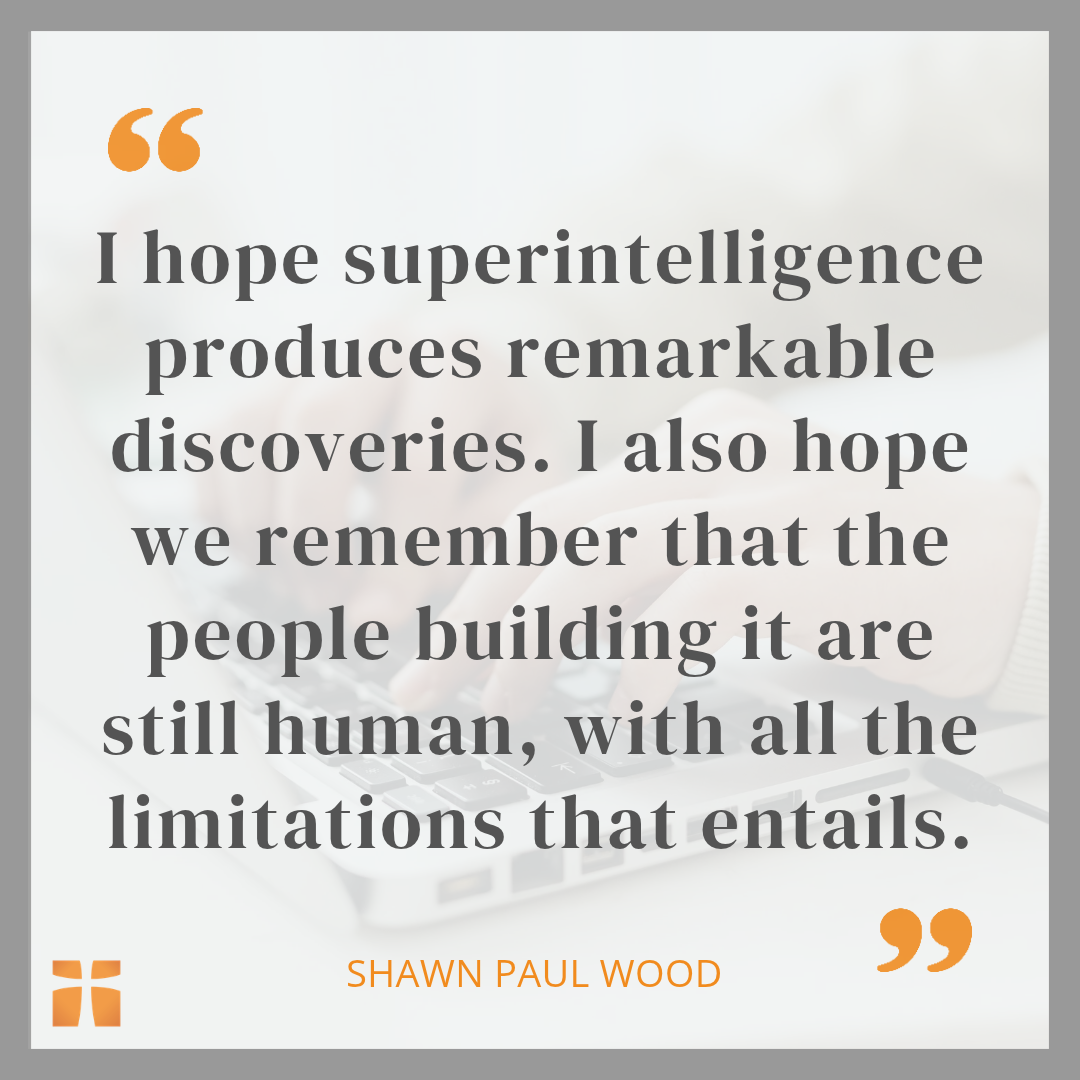
I hope superintelligence produces remarkable discoveries. I also hope we remember that the people building it are still human, with all the limitations that entails.
Proverbs 9:10 reminds us where wisdom begins. I wonder whether we're asking God for enough of it before deciding what humanity should build next.
Frequently Asked Questions
What Is Super Intelligence?
The Trump administration currently uses “Super Intelligence” as the federal government's official term for artificial intelligence broadly. This differs from the more technical idea of artificial superintelligence that exceeds human ability across most intellectual tasks.
Should Christians Be Concerned about Artificial Intelligence?
Christians do not need to fear technological innovation, but they should evaluate AI through biblical principles such as wisdom, truthfulness, human dignity, humility, stewardship, and love for others.
Does the Bible Oppose Human Innovation?
No. Scripture does not portray creativity or technological development as inherently sinful. The deeper questions concern why we create, how we use what we build, and whether accomplishment encourages pride or dependence on God.
What Does the Tower of Babel Teach about Technology?
Genesis 11 is not primarily a warning against technology. The people sought to make a name for themselves and resist God's purposes, making Babel a warning about pride, self-exaltation, and human achievement detached from obedience to God.
What Is the Difference between Intelligence and Wisdom?
Intelligence can increase our ability to process information or solve problems, while biblical wisdom concerns rightly understanding and living before God. Proverbs 9:10 says that the fear of the Lord is the beginning of wisdom.
For Further Reading
- How Christians Should Think about AI, Efficiency, and Wisdom
- Can Christians Trust AI to Interpret the Bible?
- Why AI Glasses Are Raising New Questions about Privacy and Human Dignity
- What Was the Tower of Babel?
- Why You Struggle So Hard with Contentment
Photo Credit: Annie Spratt/Unsplash
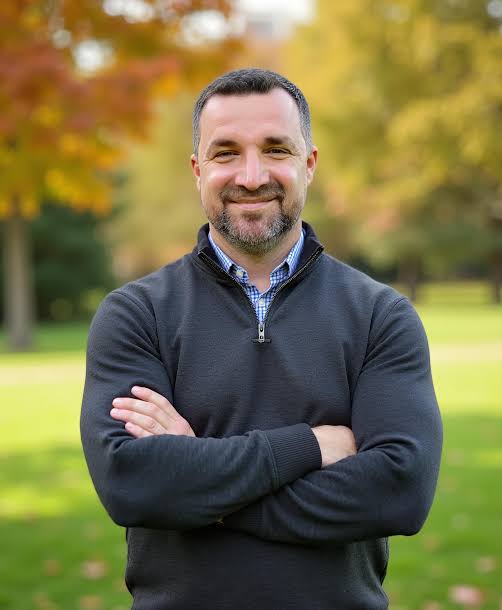 Shawn Paul Wood, Th.D., is an award-winning copywriter, storyteller and ghostwriter of faith-based books, speeches and columns for brands, spiritual leaders and Christian public figures. With more than 20 years in communications and marketing, he founded Woodworks Communications, where he leads a team of SEO, AI and content strategists. His team helps faith-based, nonprofit and mission-minded organizations turn unclear messaging into clear strategy, strong websites and stronger visibility across search and AI, including AEO, GEO, SXO and AIO. He lives in the Dallas/Fort Worth area.


